What is the Beginner’s Mind?

The beginner is blissfully unaware of the pitfalls of this form or that; and so their mind does not stop and they move in a natural way. Unfortunately this beginner’s mind slips from our grasp no matter how much we try to hold on to it and may take years of diligent practice achieve, and for many it is never achieved again.

This could be why many people flitter from one thing to another; at first enthralled by their own extraordinary ability and then blaming one teacher after another for its loss.

When one practices discipline and moves from the beginner’s territory to immovable wisdom, one makes a return and falls back to the level of the beginner. -Takuan Soho

When you study an art, be it martial or otherwise, you are taught diverse ways to move and act; how to hold the sword, racket, bat, or paint brush, and where to put your mind and therefore it stops in many places. Then when you move you are extraordinarily discomforted. After many months and years of training and practice one’s posture or the clinical manner of holding this or that do not weigh heavily on your mind and the mind no longer stops and becomes as it was at the beginning; when you knew nothing and had yet to be taught.

The beginning therefore is the same as the end and is also known as the state of No-Thought-No-Mind. More on that on another day.

Again, we can speak with reference to your own martial art. As the beginner knows nothing about either his body posture or the positioning of his sword, neither does his mind stop anywhere within him. If a man strikes at him with the sword, he simply meets the attack without anything in mind. -Takuan Soho

The mind does not stop he simply meets the attack without anything in mind

“B” is for the Beginner’s Mind

What value, an athiest prayer

I’ve witnessed some Atheists get quite flustered and occasionally angered when other people pray for them. Although I tarried in this mindset for a short period I now value the act of prayer and meditation. It is a conscious act to extend positive energy to another being or set of beings.

I don’t believe in an interventionist God. But I know darling that you do – Nick Cave (Into my arms)

This is as good a place to start to describe my viewpoint on prayer. We are not products of the environment we exist in but we are influenced in many ways by it. I grew up in a staunchly Catholic family and school system but I was encouraged not to limit my viewpoint to those taught by religious leaders, or held by the society of the time. The most profound influence however was reading The Varieties of Scientific Experience: A Personal View of the Search for God (2006) by Dr Carl Sagan based on his Gifford Lecture under the theme The Search For Who We Are.

Dr Carl Sagan is known to have said that there is no scientific evidence that God exists but he also acknowledged that neither has evidence that God doesn’t exist been provided.

In over twenty years of training in the martial arts, specifically Aikido, the most valuable notion I have discovered is the untapped power of the sentient mind.

In general terms, how often have you felt your mind disturbed and looked up to see someone watching you. Just as in combat when we sense an opponent’s attack before they physically move, so can we sense another sentient mind’s attention on our mind.

The sentient mind is a powerful instrument and should not be underestimated

 It is the act of prayer or meditation that adds value, not the actor’s faith in some hirsute gentleman or any other vision of a divine entity. So I encourage all sentient beings especially Atheists to practice the art of prayer or meditation.

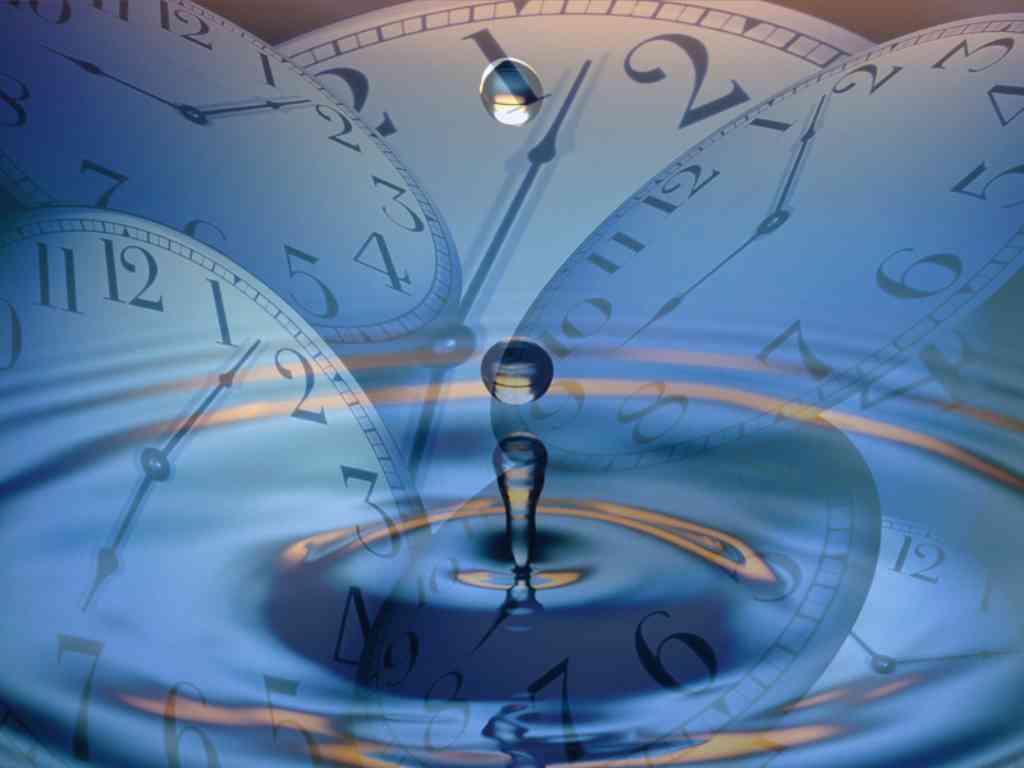
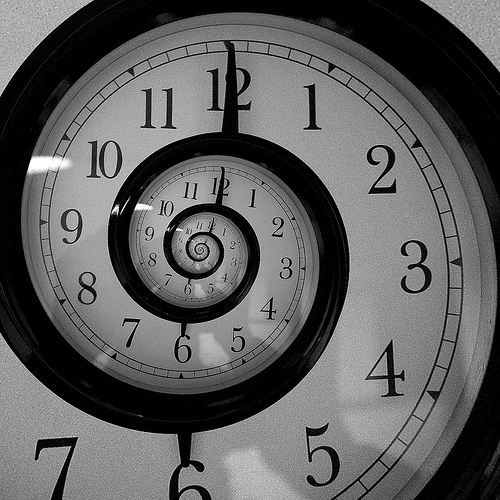
Imagining life outside of time

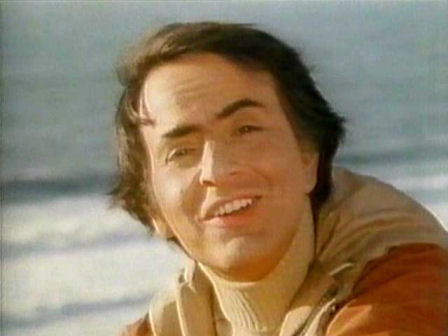
Dr Carl Sagan

Whenever the topic of multidimensional existence comes up, which is for me surprisingly often, I always remember how Dr Carl Sagan described it in his Cosmos television series. He described in terms of a two-dimensional creature imagining a three-dimensional universe. From what I recall he referred to this as “Flatland” – as you would.

This is a useful analogy and has helped me to visualise many spatial problems I’ve encountered in my professional life.

I’m currently writing a novel length piece of fiction in the alternative history genre. And being a little pedantic about such things I felt the need to theorise about how the entity, who was the catalyst for this version of the universe, lived.  And, to this end, I’m using a similar analogy.

We three-dimensional creatures may be able to move through our universe at will but there are physical limitations. It is not like we can move/jump to any point on our planet in an instant, let alone move about the universe. For me living in Australia to jump to the UK takes time and effort in both physical and monetary terms. Similar limitations should apply to an entity living in three-dimensional + time (3D+t) universe i.e. it can only move so far on a whim. Greater movement would require a corresponding increase in effort and patience.

And also, the faster I choose to travel about this three-dimensional universe there is a corresponding increase in risk to my three-dimensional body. So I expect that a similar increase in risk would apply to a creature jumping about in a 3D+t universe.

Taking this analogy a step further, each time I travel to London I don’t run into myself;  it is a different London – irrespective of how precisely I attempt to position myself in the exact spatial location. Many people have speculated that with each decision we make a new parallel universe springs into existence. I don’t think reality will be… is anything like this. There is not a new London, it is just a different one. So the 3D+t entity can visit a new time/place that it has visited previously but it doesn’t “run into” itself.

A few conundrums to end this post for now:

If a 3D+t entity lives outside time, then can it ever have a first time?

Every moment that ever was is now. Or, when each intersection of a moment in a place occurs, it is gone forever and exists only in our memory e.g. the 3D+t entity could remember being at this time/place but that is as close as it gets to “running into” itself.

How long is now?


Once again I’m drawn to the question of “How long is now?”

Now is a moment, each of them stacked in my memory; their weight affects me either as an anchor – holding me stable, or others with a kinetic energy that keeps me moving towards a goal or destiny.

Each moment of intersection between time and place that passes is gone forever and only exists because we have our memory.

Without memory there is only now.

What about some lesser animals that live predominately by instinct. They would have less put away – just enough to help them survive until the next breeding cycle, or long enough to nurture their offspring to maturity or independence – never looking further forward than their next meal; their next breath; their next heartbeat; their next thought.

Watching simple creatures like this would be f-ing boring so imagine its excitement when it discovers creatures who plan, and learn, and care about their role in the place they inhabit? It would try to help them, let them know it is here, that it exists.