What value, an athiest prayer

I’ve witnessed some Atheists get quite flustered and occasionally angered when other people pray for them. Although I tarried in this mindset for a short period I now value the act of prayer and meditation. It is a conscious act to extend positive energy to another being or set of beings.

I don’t believe in an interventionist God. But I know darling that you do – Nick Cave (Into my arms)

This is as good a place to start to describe my viewpoint on prayer. We are not products of the environment we exist in but we are influenced in many ways by it. I grew up in a staunchly Catholic family and school system but I was encouraged not to limit my viewpoint to those taught by religious leaders, or held by the society of the time. The most profound influence however was reading The Varieties of Scientific Experience: A Personal View of the Search for God (2006) by Dr Carl Sagan based on his Gifford Lecture under the theme The Search For Who We Are.

Dr Carl Sagan is known to have said that there is no scientific evidence that God exists but he also acknowledged that neither has evidence that God doesn’t exist been provided.

In over twenty years of training in the martial arts, specifically Aikido, the most valuable notion I have discovered is the untapped power of the sentient mind.

In general terms, how often have you felt your mind disturbed and looked up to see someone watching you. Just as in combat when we sense an opponent’s attack before they physically move, so can we sense another sentient mind’s attention on our mind.

The sentient mind is a powerful instrument and should not be underestimated

 It is the act of prayer or meditation that adds value, not the actor’s faith in some hirsute gentleman or any other vision of a divine entity. So I encourage all sentient beings especially Atheists to practice the art of prayer or meditation.
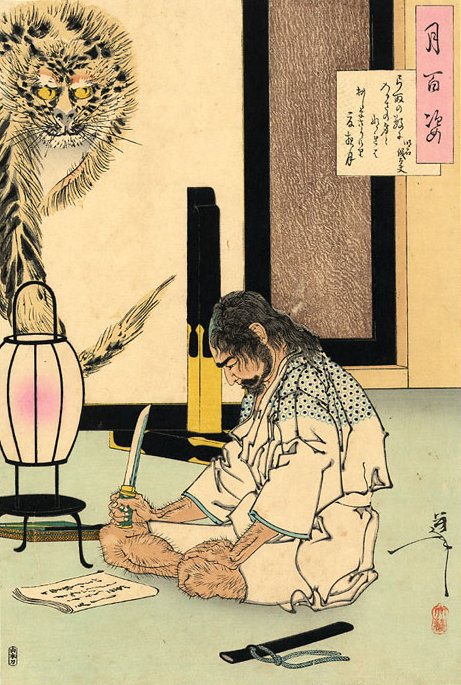
Seppuku – a must have for writers of Japanese characters


General Akashi Gidayu preparing to carry out Seppuku after losing a battle for his master in 1582

The concept of Seppuku is so ingrained in the culture and psyche of the Japanese people that, as a western writer, you cannot expect to be able to write believable Japanese characters while it remains abhorrent to you.

I remember when this occurred for me; it was a combination of “a moment of satori” with the realisation of a satirical attack—beginning with an “aha” and ending with me choking on the thought as the illusionary barriers that my subconscious had used to hide, and possibly protect my mind, from the truth. It was while reading a novel set in feudal Japan – loosely based around the Forty-Seven Ronin.

With many concepts that I have encountered in philosophical and martial arts studies it cannot be taught or learnt in isolation it can only be transmitted at the intersection of two minds, with the greater challenge for the recipient; it almost becomes them discovering the concept anew.

Imagining life outside of time

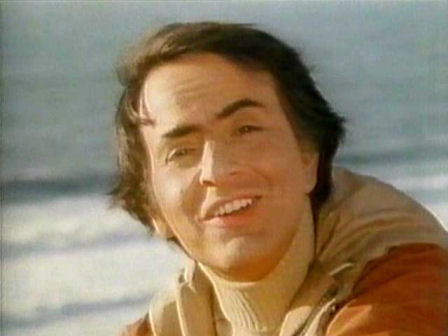
Dr Carl Sagan

Whenever the topic of multidimensional existence comes up, which is for me surprisingly often, I always remember how Dr Carl Sagan described it in his Cosmos television series. He described in terms of a two-dimensional creature imagining a three-dimensional universe. From what I recall he referred to this as “Flatland” – as you would.

This is a useful analogy and has helped me to visualise many spatial problems I’ve encountered in my professional life.

I’m currently writing a novel length piece of fiction in the alternative history genre. And being a little pedantic about such things I felt the need to theorise about how the entity, who was the catalyst for this version of the universe, lived.  And, to this end, I’m using a similar analogy.

We three-dimensional creatures may be able to move through our universe at will but there are physical limitations. It is not like we can move/jump to any point on our planet in an instant, let alone move about the universe. For me living in Australia to jump to the UK takes time and effort in both physical and monetary terms. Similar limitations should apply to an entity living in three-dimensional + time (3D+t) universe i.e. it can only move so far on a whim. Greater movement would require a corresponding increase in effort and patience.

And also, the faster I choose to travel about this three-dimensional universe there is a corresponding increase in risk to my three-dimensional body. So I expect that a similar increase in risk would apply to a creature jumping about in a 3D+t universe.

Taking this analogy a step further, each time I travel to London I don’t run into myself;  it is a different London – irrespective of how precisely I attempt to position myself in the exact spatial location. Many people have speculated that with each decision we make a new parallel universe springs into existence. I don’t think reality will be… is anything like this. There is not a new London, it is just a different one. So the 3D+t entity can visit a new time/place that it has visited previously but it doesn’t “run into” itself.

A few conundrums to end this post for now:

If a 3D+t entity lives outside time, then can it ever have a first time?

Every moment that ever was is now. Or, when each intersection of a moment in a place occurs, it is gone forever and exists only in our memory e.g. the 3D+t entity could remember being at this time/place but that is as close as it gets to “running into” itself.

Who can be my hero?

Yesterday a television commentator, Mia Freedman from the Today Show, decided that it would be a good idea to tell us who we could hold up as heroes.  She has copped a lot of abuse for her short sited and ill informed rant and some of it went well beyond what is acceptable, which I do not condone.

There have been many educated responses too; such as that made by Dr Bridie O’Donnell in an open letter to Mia.

The incident was precipitated by the Australian Cyclist Cadel Evans’ win at the 2011 Tour de France and the outpouring of emotion from his long time supporters and those who tuned in to the coverage in the last week or so.

Cadel Evans is swamped by his BMC teammates after they cross the finish line.

Although I agree that we are occasionally too quick to class some sports people as heroes but having seen the adversity through which Cadel’s victory has emerged from, and knowing firsthand how tough the sport of road cycling is, I certainly classify Cadel as a hero of mine.

Mia’s argument is the same used to play down artistic or creative endeavours as being less than those of scientists and doctors. It is through witnessing the courage of people like Cadel that the world’s “would-be-scientists” keep slogging away at their study and research in the dark hours of the night.

We don’t live for scientific or medical breakthroughs, we strive for them so that humans can live and grow. What is more important – the doctor who saves a few lives or the writer/singer/sportsperson who inspires millions to keep on going even when the circumstances become difficult and the future looks bleak.

Chapeau Cadel!

No-Mind: Do not think about not thinking at all

Thoughts have a power all of their own. Any thought we hold too tightly, or keep too close to our hearts, can have a detrimental effect on our lives.  A thought can become an obsession. For example, a thought that our partner is having an affair develops in our mind, and we filter all of their actions through it, searching for evidence however small. This small thought could develop into an obsession and jealousy and mistrust begins to taint every moment of our lives. Eventually we will see things that are not actually there and over time this will strangle the relationship like weeds in an untended garden.

We should strive to regularly empty our minds lest a thought achieves a foothold that cannot be overcome. Takuan Soho (1573-1645), a Japanese Zen Master and Philosopher from the 1600’s, provided similar advice to his contemporaries whether they were the Shogun, Master Swordsmen, fellow monks or lay members of his community. In a translation of his writings The Unfettered Mind by William Scott Wilson, he said:

If your mind leans in the direction of these thoughts, though you listen, you will not hear; and though you look, you will not see. This is because there is something in your mind. What is there is thought. If you are able to remove this thing…your mind will become No-Mind, it will function when needed, and it will be appropriate to its use.

Unfortunately achieving this state of No-Mind is difficult if not practised regularly. We must make this state, even for a heartbeat, part of our daily lives. But again Takuan warns that this too is a thought: “…the mind that thinks about removing what is in it will, by the very act, be occupied.” He wrote a short poem to help us, and four hundred years later it rings as true as the day he wrote it:

To think, “I will not think.”-

This, too, is something in one’s thoughts.

Simply do not think

about not thinking at all.

Kaligrafia_08

Kaligrafia

Takuan Soho (1573-1645) was a prelate of the Rinsai Sect of Zen, well remembered for his strength of character and acerbic wit; and he was also a gardener, poet, tea master, prolific author and a pivital figure in Zen painting and calligraphy (William Scott Wilson – The Unfettered Mind, 1986).