No-Mind: Do not think about not thinking at all

Thoughts have a power all of their own. Any thought we hold too tightly, or keep too close to our hearts, can have a detrimental effect on our lives.  A thought can become an obsession. For example, a thought that our partner is having an affair develops in our mind, and we filter all of their actions through it, searching for evidence however small. This small thought could develop into an obsession and jealousy and mistrust begins to taint every moment of our lives. Eventually we will see things that are not actually there and over time this will strangle the relationship like weeds in an untended garden.

We should strive to regularly empty our minds lest a thought achieves a foothold that cannot be overcome. Takuan Soho (1573-1645), a Japanese Zen Master and Philosopher from the 1600’s, provided similar advice to his contemporaries whether they were the Shogun, Master Swordsmen, fellow monks or lay members of his community. In a translation of his writings The Unfettered Mind by William Scott Wilson, he said:

If your mind leans in the direction of these thoughts, though you listen, you will not hear; and though you look, you will not see. This is because there is something in your mind. What is there is thought. If you are able to remove this thing…your mind will become No-Mind, it will function when needed, and it will be appropriate to its use.

Unfortunately achieving this state of No-Mind is difficult if not practised regularly. We must make this state, even for a heartbeat, part of our daily lives. But again Takuan warns that this too is a thought: “…the mind that thinks about removing what is in it will, by the very act, be occupied.” He wrote a short poem to help us, and four hundred years later it rings as true as the day he wrote it:

To think, “I will not think.”-

This, too, is something in one’s thoughts.

Simply do not think

about not thinking at all.

Kaligrafia_08

Kaligrafia

Takuan Soho (1573-1645) was a prelate of the Rinsai Sect of Zen, well remembered for his strength of character and acerbic wit; and he was also a gardener, poet, tea master, prolific author and a pivital figure in Zen painting and calligraphy (William Scott Wilson – The Unfettered Mind, 1986).

Transcending the physical limits of Einsteinian laws

Just as humans have broken through barriers we’ve previously thought to be insurmountable, so will we find a way to transcend the physical laws of gravity, space and eventually time.  In simplified terms Einsteinian law sets the practical physical limit for space travel at much less than the speed of light; the faster we travel the greater our mass and with a corresponding increase in energy to continue to accelerate. Yet in contrast we can send data at the speed of light without even trying, and have done since early last century.

Distant Spiral Galaxy NGC 4603, Home to Variable Stars
Source: Hubblesite.org

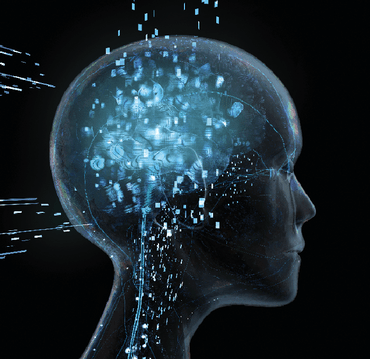
Ray Kurzweil describes a point in our evolution—it is closer than we think—when we can convert our entire consciousness into data (not just our memory), and, therefore, send it at the speed of light where ever we want. But if there is nothing out there to receive it, it will remain as data and continue on infinitely through the universe. If we do come to communicate with a similarly intelligent and advanced society light years away we could first send information and instructions on how to build a biological vessel for our transported consciousness to be downloaded to. We will find ourselves having traveled across space at impossible speeds for physical objects.

To me this sounds perfectly plausible and if it sounds plausible to us in our current primitive state then it will be much simpler in the future.

We have to unshackle our minds from the physical world, and limiting our thoughts to the current and immediately past paradigms. The universe is too big [yet another physical term?] for that. I think this is a way for us to comprehend the universe as infinite. With our minds shackled to physical ideals we cannot grasp the infinite; the best we can do is think of something so large we can barely comprehend it. To truly be able to understand the infinite we must release our maniacal grasp on physical ideals…all of them.

Kurzweil’s Singularity and artificial enhancements to our body

The concept of the singularity came up last night while I was researching an aspect of my novel. According to Ray Kurzweil, the singularity is point in the evolution of the universe when technology can improve itself faster than humans can improve it and the technology cuts us out of the loop.

ieee-spectrum-technological-singularity-thumb

Long before this point, however, Kurzweil predicts there will be only a few humans without extensive artificial enhancement wether it be enhanced limbs, digestive systems, or the insertion of entertainment driven nanobots. He also suggests the possibility to upload your mind entirely from your physical body. I found this disconcerting and a little depressing. It is not the future I imagined for my grandchildren where the line between their natural human presence and a humanoid cyborg is blurred.

This was a distraction to my research and I pushed these thoughts to one side and continued along, suitably engrossed, on my original path of discovery. The next time I looked up from my books and notebook I noticed it was 1am and thought, “Why do I have to sleep? There’re so many things I want to research and understand!” My mind raced while I reluctantly closed the notebook and slid my fountain pen into its leather case. How could I get by with less sleep? And then, like the target of my own satirical attack I choked on the thought. This is why humans will opt for artificial enhancement; not just to run faster, or to breathe in a CO2 rich atmosphere, but to release our mind from the dirty biological container it’s entrapped in.

I realised I will be tempted to upload my mind. But this realisation led me to consider what would become of the mind/body that remained—I must assume the uploaded “consciousness” is a copy. Would it be culled and consumed as some form of payment for service, or could the physical part be “parked” as a potential refuge for the mind if an emergency eventuated that threatened the security of the artificially supported entity in the world wide neural web? A hard copy backup or snapshot…

How would these artificially supported consciousnesses interact? Just consider the difficulty in sustaining a long distance relationship without the occasional physical visit. Maybe we’ll interact in a completely virtual environment so authentic the experience sufficiently meets the demands of our minds; however unclear they currently may be. There’s has to be a short story here at least!

Lying about the truth

Humans lie. We do it all the time. Doing one thing when instinct tells you to do another is the same as lying. This is what differentiates us from simpler life forms, which mostly decide their actions with instinct alone—driven by the underlying requirement for the survival of the species. They kill to eat, to live and to procreate. They procreate when ever and where ever they can. In contrast (most) humans do not have sex with any willing and attractive person they see, even though there is a strong desire in us to do so. This too is a lie—a denial of the truth.

Humans use other factors to decide on their actions. Some humans choose to kill other humans, even though they must know it is wrong. Do not be too hasty to deride this ability to ignore a call to action from our instinct, as it is the same ability we use to act in an altruistic manner. Sometimes we act against our species’ better judgement, sacrificing the many for the few…or even the one (and sometimes an insignificant one)—with potential alone to achieve for our species.

So the same behavioural traits and thought processes that raise us above less sentient creatures, the ones that make us in to “Gandhi”s or “Mother Teresa”s, are the same ones that can drag us down an make us in to “Hitler”s and “Pol Pot”s.

It seems, at this stage in our evolution or enlightenment, we cannot have one without the other.