Henry Miller’s Work Schedule

July 1970 with Rip Torn

– Courtesy of Corey Mandell Screenwriting Ramblings

COMMANDMENTS

1. Work on one thing at a time until finished.

2. Start no more new books, add no more new material to “Black Spring.”

3. Don’t be nervous. Work calmly, joyously, recklessly on whatever is in hand.

4 Work according to the program and not according to mood. Stop at the appointed time!

5. When you can’t “create” you can “work.”

6. Cement a little every day, rather than add new fertilizers.

7. Keep human! See people; go places, drink if you feel like it.

8. Don’t be a drought-horse! Work with pleasure only.

9. Discard the Program when you feel like it–but go back to it the next day. CONCENTRATE. NARROW DOWN. EXCLUDE.

10.Forget the books you want to write. Think only of the book you “are” writing.

11 Write first and always. Painting, music, friends, cinema, all these come afterwards.

MILLER’S DAILY PROGRAM

Mornings: If groggy, type notes and allocate, as stimulus. If in fine fettle, write.

Afternoons: Work on section in hand, following plan of section scrupulously. No intrusions, no diversions. Write to finish one section at a time, for good and all.

Evenings: See friends. Read in cafes. Explore unfamiliar sections–on foot if wet, on bicycle if dry. Write, if in mood, but only on Minor program. Paint if empty or tired. Makes Notes. Make Charts, Plans. Make corrections of MS.

Note: Allow sufficient time during daylight to make an occasional visit to museums or an occasional sketch or an occasional bike ride. Sketch in cafes and trains and streets. Cut the movies! Library references once a week.
Why can’t revolutionaries get their people to the end state?

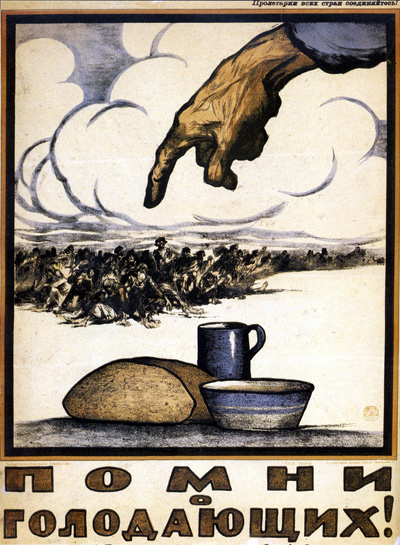
Remember Those Who Starve! - 1921

Remember Those Who Starve! - 1921 Russian Poster by Ivan Simakov (1877-1925). Source: Wikipedia (public domain)

Wilkins was shocked by the devastation inflicted upon the Russian people when he visited there in the 1920’s. In a letter to his friend Yanagita he wrote:

Revolutionaries see only the end state. Their minds are rarely big enough to see how the people they hope to save cannot reach this place alone. They have to be carried. It’s like a parable my father once told me about: how Jesus carried a man through his most difficult times. We have to be the people’s Jesus if we want them to make it safely from where they have been to where we want them to be.

Only describe the extraordinary

Image

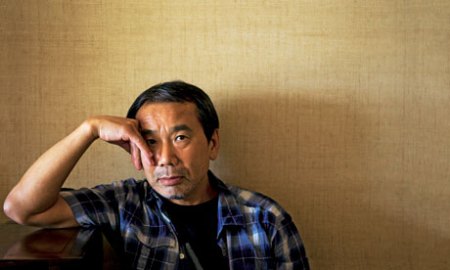
Over the New Year I read a paragraph of Haruki Murakami‘s new novel 1Q84 (pg. 189 HB) and found a wonderful insight to improve my descriptive writing.

An older editor, Komatsu, gave a younger writer some advice on a piece of fiction he was we-writing:

“When you introduce things that readers have never seen before into a piece of fiction, you have to describe them with as much precision and in as much detail as possible. What you eliminate from fiction is the description of things that most readers have seen.”

There is nothing more sure to stop a person reading than if you describe an ordinary scene in a clinical manner. If it is just a room, call it that; a room, and leave the reader to fill in the blanks. But if the room is imperative to the story then describe it through the eyes and tilted perception of the mind of your narrator or character.

I’d love to read a literal translation of Marakami’s original dialogue for his character Kamatsu. Please comment if you find it?

What value, an athiest prayer

I’ve witnessed some Atheists get quite flustered and occasionally angered when other people pray for them. Although I tarried in this mindset for a short period I now value the act of prayer and meditation. It is a conscious act to extend positive energy to another being or set of beings.

I don’t believe in an interventionist God. But I know darling that you do – Nick Cave (Into my arms)

This is as good a place to start to describe my viewpoint on prayer. We are not products of the environment we exist in but we are influenced in many ways by it. I grew up in a staunchly Catholic family and school system but I was encouraged not to limit my viewpoint to those taught by religious leaders, or held by the society of the time. The most profound influence however was reading The Varieties of Scientific Experience: A Personal View of the Search for God (2006) by Dr Carl Sagan based on his Gifford Lecture under the theme The Search For Who We Are.

Dr Carl Sagan is known to have said that there is no scientific evidence that God exists but he also acknowledged that neither has evidence that God doesn’t exist been provided.

In over twenty years of training in the martial arts, specifically Aikido, the most valuable notion I have discovered is the untapped power of the sentient mind.

In general terms, how often have you felt your mind disturbed and looked up to see someone watching you. Just as in combat when we sense an opponent’s attack before they physically move, so can we sense another sentient mind’s attention on our mind.

The sentient mind is a powerful instrument and should not be underestimated

 It is the act of prayer or meditation that adds value, not the actor’s faith in some hirsute gentleman or any other vision of a divine entity. So I encourage all sentient beings especially Atheists to practice the art of prayer or meditation.

Seppuku – a must have for writers of Japanese characters


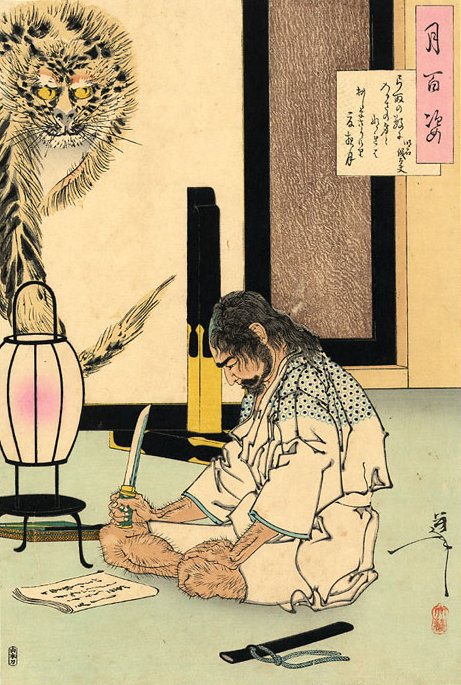
General Akashi Gidayu preparing to carry out Seppuku after losing a battle for his master in 1582

The concept of Seppuku is so ingrained in the culture and psyche of the Japanese people that, as a western writer, you cannot expect to be able to write believable Japanese characters while it remains abhorrent to you.

I remember when this occurred for me; it was a combination of “a moment of satori” with the realisation of a satirical attack—beginning with an “aha” and ending with me choking on the thought as the illusionary barriers that my subconscious had used to hide, and possibly protect my mind, from the truth. It was while reading a novel set in feudal Japan – loosely based around the Forty-Seven Ronin.

With many concepts that I have encountered in philosophical and martial arts studies it cannot be taught or learnt in isolation it can only be transmitted at the intersection of two minds, with the greater challenge for the recipient; it almost becomes them discovering the concept anew.