The Bureau of the Five-Grain Transmigration – from A Journey to the West

A Journey to the West is one of the four great Clasics of Chinese literature and was written in the sixteenth centuury by Wu Cheng’en. In the west it is better known by as “Monkey” because of the 1960’s cult television series of that name.

A scene of Journey to the West

A scene of Journey to the West (Photo credit: Wikipedia)

It tells the story of the pilrimage of the buddist monk Xuangzang. In this excerpt the character Pilgrim (aka the Handsome Monkey King) is called by the derogatoryly term pi-ma-wen, by “Idiot” (aka. Piggy).

“Just now when we entered the hall,” Pilgrim said, “I chanced to notice a little door on our right. Judging from the foul stench coming through it, I think it must be a Bureau of Five-Grain Transmigration. Send them in there.”

Idiot, in truth, was rather good at crude labour! He leaped down, threw the three statues over his shoulder, and carried them out of the hall. When he kicked open the door, he found a huge privy inside. Chuckling to himself he said, “This pi-ma-wen truly has a way with words! He even bestows on a privy a sacred title! The Bureau of Five-Grain Transmigration. What a name!” Yu, A.C. 1977, The Journey to the West Volume II Pg. 315. (Translation of)

An illustration of Zhū Bājiè

It seems as though even the classics can’t let a good peice of toilety humour pass them by.

“F” is for the bureau of Five-Grain Transmigration

Is Ego the mind killer?

There is no more destructive but imperative construct to our existence than Ego. With too little of it we are like a washed out water colour painting, too much and then self destruction is  inevitable.

Don’t mistake modesty for a lack of ego either, some of the most outwardly modest people suffer the same malady.

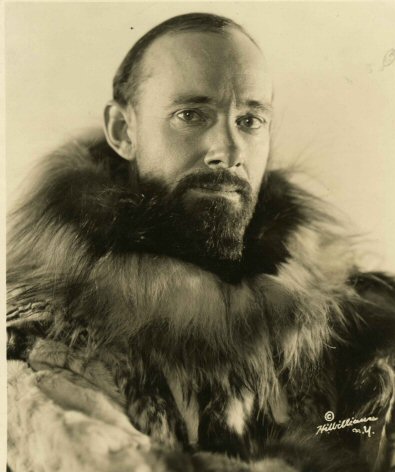
Sir Hubert Wilkins the great polar explorer, ornithologist, pilot, soldier, geographer and photographer is a great example of this.  General Sir John Monash , on returning to Australia after WWI eulogised Wilkins as “The bravest man alive” at a large public gathering. He later received a message from Wilkins “begging him not to praise him publicly again.”

And Vilhjalmur Stefanson, a fellow polar explorer met With General Monash later and told the Australian papers:

Sir John Monash seems to agree with me that Wilkins is so aggressively modest that he carries it to a fault. It ought to be enough to hide your light under a bushel without threatening to knock anybody down who wants to take the bushel away.

I think Wilkins hid a large ego under that same bushel, and it is more likely that it was the escape of this ego that he feared more. Wilkins came close on several occasions to destruction, and causing the death of the men and women who served with him but in the end it may have been his strong caring nature that helped keep his ego under that bushel.

A little luck didn’t go astray either.

Ego in the martial arts has ruined many teachers. It seems that a large ego is a prerequisite to lead a dojo, it is especially to attractive to new students who seek a sensei/master/guru figure.

I have seen several sensei self destruct, believing to much of their own publicity and get summarily purged from their style’s national or international organisation. The ego must be held in check.

The first step must be awareness.

“E” is for Ego

Who was the 15th Dalai Lama?

My faourite quote from the 15th Dalai Lama is:

People object when coerced down a particular path, even if they know it is for the better. It is primeval; they feel trapped and cannot get passed this feeling. You have to make them want to go; make the lead so soft they forget it is there.

PS. FICTION WARINING!!!

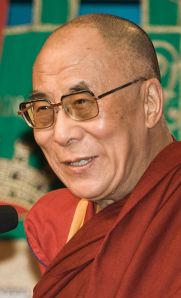
The current Dalai Lama (the 14th one) trancends the idea of a religeous leader and is almost an architype to himself. I’m no longer surprised when I come across him as a character in fiction. This by no means denigrates His Holiness, it is because he has touched so many of our lives. The drawers at my writing desk are filled with his quotes and advice on little peices of paper or desk calendar tear offs:

“Sometimes we feel that one individual’s action is very insignificant.  Then we think, of course, that effects should come from channeling or from a unifying movement.  But the movement of the society, community or group of people means joining individuals.  Society means a collection of individuals, so that initiative must come from individuals.  Unless each individual develops a sense of responsibility, the whole community cannot move.  So therefore, it is essential that we should not feel that individual effort is meaningless- you should not feel that way.  We should make an effort.”— His Holiness the Dalai Lama, from ‘The Dalai Lama’s Book of Love and Compassion’, available from Snow Lion Publications.

This quote empowers the individual and comes to my mind whenever I hear people lament their “one” vote or slip into apathy. I keep it close.

The quote at the start of this blog appeared in a short Sci-Fi story I wrote entitled “Panacea” set around the middle of the twentyfirst century. In the story I needed to insert a spiritual element in an attempt to “softly lead” the readers mind to a particular conclusion that I left unsaid at the end of the story.

This fictional Dalai Lama (I remind you of this again) I once desribed to a writer friend as the 14th Dalai Lama on crack. He was less predictable than the 14th Dalai Lama. I felt that if His Holiness had any failing it was that he was so archetypal, so good, and therefore predictable and open to manipulation by subversive groups.

My 15th Dalai Lama never held a gun but he was militant and as Murakami wrote in his book 1Q84:

“Once a gun appears in a story, it will be shot and someone will die”.

D is for the “Dalai Lama”

What is the Beginner’s Mind?

The beginner is blissfully unaware of the pitfalls of this form or that; and so their mind does not stop and they move in a natural way. Unfortunately this beginner’s mind slips from our grasp no matter how much we try to hold on to it and may take years of diligent practice achieve, and for many it is never achieved again.

This could be why many people flitter from one thing to another; at first enthralled by their own extraordinary ability and then blaming one teacher after another for its loss.

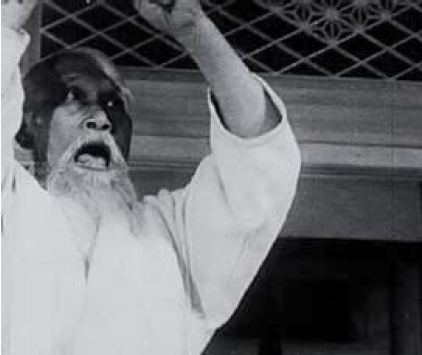
When one practices discipline and moves from the beginner’s territory to immovable wisdom, one makes a return and falls back to the level of the beginner. -Takuan Soho

When you study an art, be it martial or otherwise, you are taught diverse ways to move and act; how to hold the sword, racket, bat, or paint brush, and where to put your mind and therefore it stops in many places. Then when you move you are extraordinarily discomforted. After many months and years of training and practice one’s posture or the clinical manner of holding this or that do not weigh heavily on your mind and the mind no longer stops and becomes as it was at the beginning; when you knew nothing and had yet to be taught.

The beginning therefore is the same as the end and is also known as the state of No-Thought-No-Mind. More on that on another day.

Again, we can speak with reference to your own martial art. As the beginner knows nothing about either his body posture or the positioning of his sword, neither does his mind stop anywhere within him. If a man strikes at him with the sword, he simply meets the attack without anything in mind. -Takuan Soho

The mind does not stop he simply meets the attack without anything in mind

“B” is for the Beginner’s Mind