Carl Sagan, and the Baloney Detection Kit

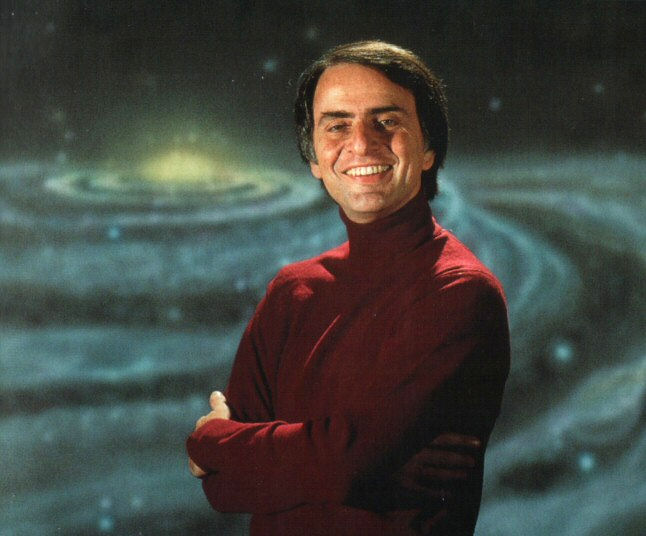
When asked to cite the most influential person to the way I perceive the universe I have no hesitation to say that it is Carl Sagan.

The first time I heard about Carl Sagan was in a Physics Lecture in year twelve at school. Our teacher had recorded the opening episode of Cosmos and from not too far into it my world view expanded and I’ve never looked at things the same way again. The original Cosmos television series from the 1980s is where Sagan entered most of our lives but for many it was through his academic works or the leading role he played in the American space program.

NASA gave Sagan three weeks to design a message to be engraved on two twenty three centimetre wide aluminium plaques attached to the Pioneer Deep Space Probes.

As well as his work in the scientific community Sagan also wrote fiction – I’ve found most of the best scientific minds also have a highly developed imagination.

He wrote the book Contact,  and in 1997  was made into a Hollywood movie staring Jodie Foster. At the end of this book (spoiler alert) the main character is labeled as a fraud and even begins to doubt her memory. She goes on to search for deeper meanings eventually in the last passage discovers the pattern of a perfect circle encrypted in the decimal places for the mathematical constant Pi. The gist of this revelation being that the shape of a circle, and if so, the universe was designed and did not simply spring into existence.

Initially I found this an odd inclusion for probably the world’s most famous atheist. But later reading his work The Demon Haunted World this is the sort of evidence that would pass all of the tests in his well publicised Baloney Detection Kit.

Sagan is a famous skeptic and this Baloney Detection Kit  provides a set of tools for testing arguments and detecting fallacious or fraudulent arguments:

Baloney Detection Kit

  • Wherever possible there must be independent confirmation of the facts.
  • Encourage substantive debate on the evidence by knowledgeable proponents of all points of view.
  • Arguments from authority carry little weight (in science there are no “authorities”).
  • Spin more than one hypothesis – don’t simply run with the first idea that caught your fancy.
  • Try not to get overly attached to a hypothesis just because it’s yours.
  • Quantify, wherever possible.
  • If there is a chain of argument every link in the chain must work.
  • Occam’s razor – if there are two hypotheses that explain the data equally well choose the simpler.
  • Ask whether the hypothesis can, at least in principle, be falsified (shown to be false by some unambiguous test). In other words, it is testable? Can others duplicate the experiment and get the same result?

“If you wish to make an apple pie from scratch, you must first create the universe.” — Carl E. Sagan, professor, Cosmos, 1980

Another of his books that is worth seeking out is The Varieties of Scientific Experience: A Personal View of the Search for God. It was published on the tenth anniversary of his death and is based on his famous Gifford Lectures in Natural Theology.

The suppression of uncomfortable ideas may be common in religion or in politics, but it is not the path to knowledge, and there’s no place for it in the endeavor of science. We do not know beforehand where fundamental insights will arise from about our mysterious and lovely solar system.

The history of our study of our solar system shows us clearly that accepted and conventional ideas are often wrong, and that fundamental insights can arise from the most unexpected sources. – Carl Sagan

“S” is for Carl Sagan

Ray Kurzweil…and the singularity

Ray Kurzweil, the Futurist, wrote The Age of Intelligent Machines between 1986 and 1989 and in it he extrapolated existing trends to make many predictions about technology. He predicted that:

by 1998 a computer would beat the world’s best chess player. In fact IBM’s Deep Blue computer beat the World Chess Champion Garry Kasparov.

He also stated that the Internet would explode not only in the number of users but in content as well, eventually granting users access “to international networks of libraries, data bases, and information services”.

Kurzweil wrote that, due to paradigm shifts, a trend of exponential growth will extend Moore’s law from integrated circuits to electromechanical computers. He predicts that the exponential growth will continue, and that in a few decades the computing power of all computers will exceed that of human brains, with superhuman artificial intelligence appearing around the same time.

Moore's Law, The Fifth Paradigm

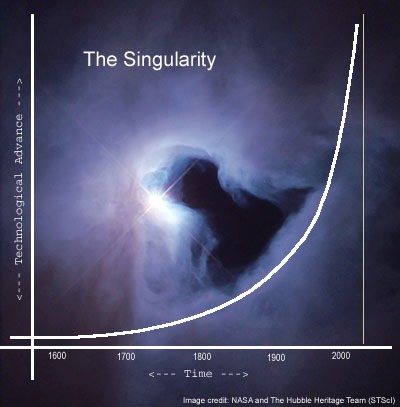
In his most controversial prediction however Kurzweil postulates a law of accelerating return where by the improvements in technology increase exponetially to a point known as the Technological Singularity where the computer, medical, and material technology (nanotechnology) advances to enable artificial intelligence or amplification of human intelligence.

“The Singularity will allow us to transcend these limitations of our biological bodies and brains … There will be no distinction, post-Singularity, between human and machine.” Ray Kurzweil The Singularity is Near pg. 9

I have read many descriptions of the Technological Singularity but the most simple is that at this point artificial intelligence can improve itself faster than humans can and thay will do exactly that, effectivly cutting us out of the loop.

Although many technologists do not support the plausibility of a sudden change such as this, the issue is worthy of study by artificial intelligence reserchers.

R is for Ray Kurzweil – the Futurist

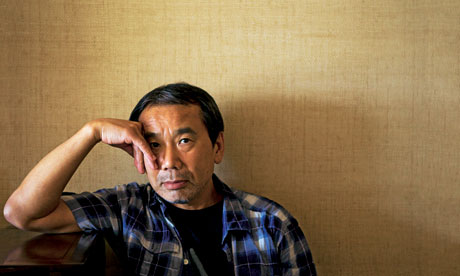
1Q84 – Murakami’s cult masterpiece

Haruki Murakami’s epic novel 1Q84 was an instant success in Japan and soon its publishers were in a mad rush to get the work published for the english language market.

Oddly mirroring the plot line in the novel where one of main characters ghost rewrites a story, the publishers of 1Q84 were in such a hurry to get it to market that they enlisted the services of two different writers to translate the work; one for books I and II, and another for book III.

Set it Japan in 1984 the story revolves around two central characters:

  • Aomame (written with the same characters as the word for “green peas” and pronounced Ah-oh-mah-meh); a female fitness instructor and part-time assassin
  • and Tengo, an aspiring novelist and part time editor and maths lecturer

The point of view alternates each chapter with Aomame and Tengo and the reader slowly learns their connection. Murakami enjoys playing with the time period too and takes his time explaining iconic objects of the time.

1Q84 features an immaculate   conception, telekinesis, transmigrating souls and a talking crow. But the   more blatant oddness of Murakami’s plots tends to distract us from their   roots in emotions that are just as unaccountable. A virtue of his writing is   that, carried away, you rarely sense the strain. – Anthony Cummins The Telegraph UK


Knopf / Getty Images

The title 1Q84 has its roots in a few different places; it is set in 1984, there is of course George Orwell’s novel 1984, and in the story Aomame coins the term for the odd version of the world she finds herself in; it is 1984 but also no longer the same. The name of the letter Q is also the same sound in Japanese as the number nine “Kyu”. And the complexity of this too mirrors that of the storyline in many ways.

…Yes, this is a Haruki Murakami novel, where magical and dreamlike phenomena are deadpanned into existence with the same calm craft that his characters routinely employ in cooking themselves delicious-sounding Japanese meals. – Stephen Poole, The Guardian UK

Murakami has a knack for oddball twists (talking cats, raining fish) and in 1Q84 this continues with terrifying “little people” emerging from the mouths of goats and people and a moss coloured second moon hanging in the sky.

Having Tengo and his editor and co-conspirator discuss the writing and editing process delivers some classic writing advice:

“When you introduce things that readers have never seen before into a piece of fiction, you have to describe them with as much precision and in as much detail as possible. What you eliminate from fiction is the description of things that most readers have seen.”

and on story development:

“Once a gun appears in a story, it will be shot and someone will die”. 

1Q84 is a masterpiece but I am left a little frustrated at having to read the translated story rather than Murakami’s original Japanese work.

Q is for 1Q84 by Haruki Murakami

How I kicked asthma by simply breathing

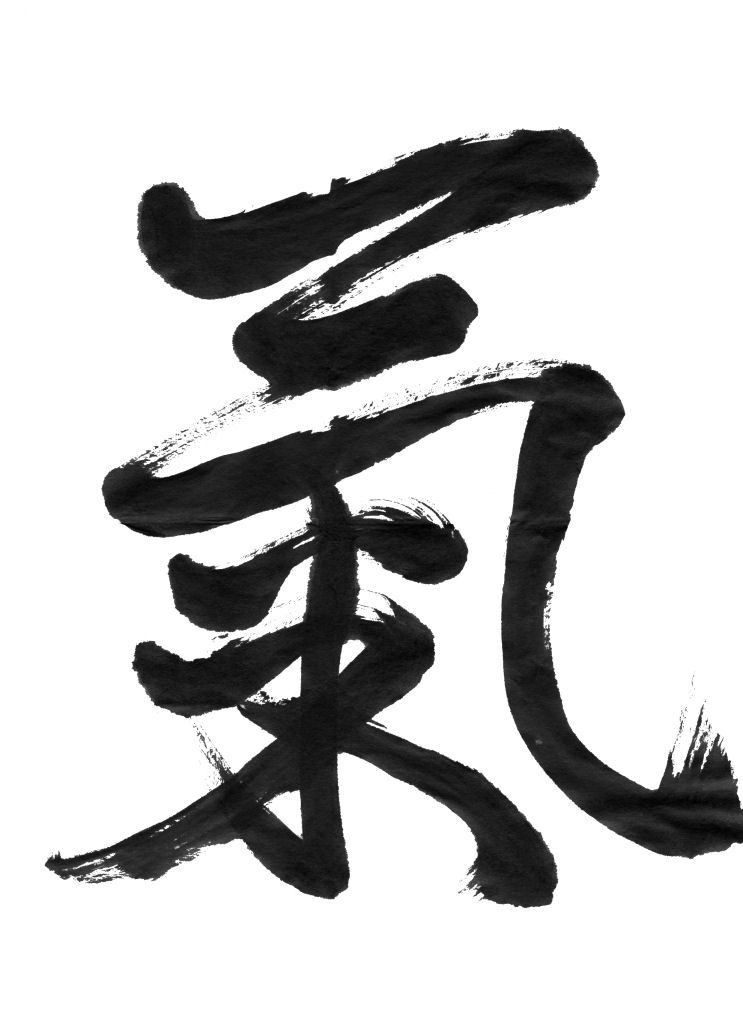
Ki is universal energy, pronounced Qi in Chinese.

Our body can survive without eating for weeks, without drinking water for days, but if we cannot breathe our body will die in a few minutes.

I suffered with asthma throughout my childhood and couldn’t exercise at anything closed to high intensity without wheezing and reaching for my inhaler. I didn’t go anywhere without it. Every year it was getting worse too, and in my early thirties I found each winter a simple chest infection would become debilitating and I was prescribed steroids to get through it.

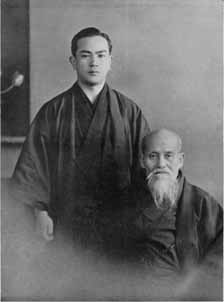
Koichi Tohei and Morihei Ueshiba "O'Sensei"

I had been training in Aikido though and for my shodan (first dan) grading I was required to write an academic essay on Aikido. I researched the lives of the founder of Aikido; Morihei Ueshiba “O’Sensei”, and the head of our style of Aikido Koichi Tohei.

I was startled to read that Tohei Sensei too had struggled with poor health during Aikido training with O’Sensei. Tohei had also studied Zen, Yogo and meditation and had learned a primitive form of whole body breathing where each breath, in and out would extend for up to one minute.

When war service interpreted his Aikido training he vowed to practice three hundred breaths each day for one year.

If he missed a day he would do double the next day to make them up

I did not set my own goals that high, not even halfway. I decided to practice thirty breaths a day.

My Sensei (Stoopman) had taught us about Ki Breathing, explaining that our lungs were like a stagnant lake; full of foul water that could not sustain life. But that if a little of the foulest water was replaced with fresh water each day then over time the lake would be returned to health.

Thirty breaths a day, how hard could that be? I thought.

It was hard. Whatever you’re thinking, it was harder than that. Ki breathing is not just sitting in seiza and drifting off, there was true physical pain. The first breath is slow but as they became longer my lungs screamed as I pushed my diaphragm to expel every milliliter  of air from my lungs, when every instinct in my being called for me to suck air in. And when filling my lungs, stretching them beyond their capacity, all I wanted to do was breath out again.

Progress wasn’t slow, it was non existent.

I kelp a register though and once missed ten days straight, that meant double effort for another ten days just too break even. I only let it slip that far once.  After several months it became my nightly or early morning habit but I still hadn’t noticed any progress.

That’s the thing about breathing, you don’t notice when you’re doing it right.

Over a year and a half later I returned from a business trip and found my inhaler on the ground under my bed. I had forgotten to even take it, let alone think to use it.

This was an empowering feeling, one you may only understand if you had also been reliant on a similar device for relief of symptoms or pain. I told everyone, including my skeptical doctor. She tested my lung capacity and it had increased, not to a healthy level but it was a improvement.  But my success distracted me and I let a few days slip past and then a few weeks and then at work one day I was ruffling through my desk draw looking for that damned inhaler.

What I’d been told many times but failed to understand was that it was a healthy process I should strive for, not a cure.

I’d stalled the cleansing process at the first sign of life and it had not taken long for the rot to set back in.

So I made Ki Breathing a part of my life, not looking to cure my asthma but to dilute its symptoms one breath, one day, at a time. Now many years later I haven’t had any asthma medication for more than ten years and have almost forgotten what it feels like to be short of breath or wheeze, even doing lactate threshold training (vomit training) on my bike at nearby Mt Coot-tha.

Now my lungs are like a healthy lake, full of fresh clean water, and even if I get a chest cold it is like a drop of foul water in the ocean (…lake) and is soon dissipated without a trace.

Enough testimonial, how do you do it!

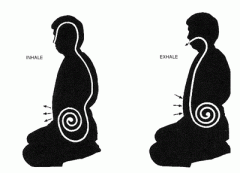
  1. Position yourself in the correct seiza posture; or on a chair with mind and body unified leaning slightly forward over your centre; knees about two fists apart. Place both hands lightly on the thighs with fingers naturally pointing downward. Straighten the sacrum and relax the whole body while bringing the mind down to the one point or hara. This is the neutral position. Concentrate and imagine your mind at your centre. Allow your muscles to naturally relax but not collapse.
  2. When you have inhaled all that you comfortably can, you are ready to begin… Close your eyes gently, mouth slightly open and start to exhale calmly, as if saying ‘ah’ without using your voice. Maintain the same sitting posture while exhaling. Imagine breathing out completely emptying your body, right down to the toes. When the breathe has naturally expired, incline the head and body slightly forward visualising your breathe still travelling out. Exhalation should be about 15-20 seconds at first, tilting the body, visualising your continued breath for about 5-8 seconds. The exhalation process should be from the chest first, then the abdomen, the inhalation process is the reverse, breathe into the abdomen first then into the chest.
  3. Inhaling – keeping the same posture as the finished exhalation position, close mouth and being to inhale calmly through the nose with a smooth, relaxed sound. Imagine filling your body with clean air gradually from the toes through the legs, abdomen, and chest for about 15 seconds. When the chest is naturally full (without raising your shoulders) return the upper body to the original position for a duration of about 5 seconds, the whole time visualising your breath still entering your body. Your head should return back to the neutral position calmly. Note: Do not over-stretch the chest or lean back too far when returning to the original position.

Start with shorter breaths and lengthen them a little with each breath. When they are longer don’t be alarmed to hear the crackle of flem as you expel the last bit of air from the deepest reaches of your lungs, savor this as it is clearing parts of your lungs that have not felt fresh air possibly since your birth.

"Mind and Body Are One", calligraphy by Koichi Tohei Sensei

Tohei Sensie passed away last May at the age of 91. Here is a link to the official website for his Ki Society Aikido.

Note: The Ki calligraphy at the top of this post was painted by Shodo master Kojima Sensei at a demonstration he gave at an Aikido Seminar in Brisbane Australia in 2005.

“K” is for Ki Breathing

The strategic game of Go

The Japanese game of Go has fascinated me for many and I have included it in a scene in the novel I’m writing. In the scene, set in May 1917, the main point of view character Lieutenant “Wilkins” has been granted passage on the Japanese battle Cruiser Kasagi from Cape Town to England. On the ship he meets the ethnologist Yanagita and they begin a life long friendship.

"Go" a type of Asian chess

"Go" (Photo credit: Wikipedia)

It was after midnight and only a minimal crew were on duty. Wilkins stepped through the hatch leading out onto the deck and inhaled, through his nose, the crisp air into his lungs. He held this breath, for a several long seconds before exhaling audibly and headed forward along the starboard deck.

The stars shone as brilliant pin points in the dark sky—perfect for navigation; clear skies and negligible swell would make taking readings from the sextant child’s play. The only sound was the quiet whirl of a breeze in his ears and an intermittent clicking sound coming from up forward.

Wilkins had always enjoyed walking, particularly early in the morning and again late at night just before sleep. Since his bout of influenza he had not returned to the habit. Maybe this was why he felt so constrained. The ship was just coasting along as if the world were not at war.

He maintained a solid pace around the perimeter of the ship. His body had grown accustomed to his enforced docility and soon his shins ached with every long stride. He had made about three circumnavigations of the ship before he heard a familiar voice call out.

‘Wilkins-san, please come and join us,’ called Yanagita from the shadows of the guns on the foredeck.

Yanagita sat cross-legged on a thick cushion, and opposite him was a grey haired man. Between them, in the moonlight, was a low wooden table—about knee height. Their eyes were bright and smiles wide.

‘Come sit with us a while,’ Yanagita said, raising his arm to welcome Wilkins to their table.

Despite the cool air, both the Japanese men were naked to the waist. Wilkins stood for a moment.

‘I’m sorry Yanagita-san, I’ve disturbed you both,’ he said and nodded to the older man.

‘No, do not worry, please, let me introduce Kawabata-san, ni go-shokai shimasu,’ Yanagita said nodding towards the grey haired man.

Wilkins put out his hand.

‘Good evening Kawabata-san, komban wa,’ he said and glanced to Yanagita to check his pronunciation.

Kawabata looked to be in his late fifties. His grey hair was cropped short and rough. He reminded Wilkins of the veteran sailors he had met in northern Canada and the Arctic.

Kawabata nodded his dark tanned head and motioned for Wilkins to join them.

‘Dozo,’ he said.

‘Thank-you, arigato,’ Wilkins said realising that Kawabata may not speak English.

He lowered himself to the ground and sat between them at the small low table.

‘Wilkins-san, you have walked passed us several times. You are, in a hurry, to get to this war?

‘Yes,’ he replied, ‘it’s a dire time for the Empire and our Allies.’

‘All the more reason to use this respite to recover your strength properly.’

‘I know,’ Wilkins sighed, ‘but I need to play my part.’

Wilkins was aware of Kawabata watching him. Did the old man understand?

Yanagita continued, ‘We all have a part to play but it is rarely what we expect.’ He paused and then gestured at the table. ‘This is Go.’

The table top looked to be one solid piece of wood about ten inches thick, and it had a square grid of lines etched upon it in black. Many small black and white stones had been placed haphazardly across the table, but always at the intersections of the gridded lines.

‘A cousin to the game of Chess,’ Yanagita continued.

Wilkins nodded.

‘Yes, checkers, Chinese Checkers I think we call it.’

‘Ah no, Wilkins-san, not Chinese Checkers, this is Go. It is a game of strategy, some say, invented by the Chinese Emperor Shun almost forty-one centuries ago. But I think an Emperor would have too many things on his mind to invent such a game.’

Wilkins’ travels had given him the opportunity to discover the customs of many indigenous peoples and he had learnt many Inuit games; becoming adept at seal fin puzzles.

‘What are the rules Yanagita-san, can you teach me to play?’

Yanagita smiled.

‘Samimasen, I am sorry Wilkins-san, not tonight. But you are most welcome to watch. You see Kawabata and I have a wager on this particular game.’

He picked up a black stone from the wooden bowl on the table closest to him and placed it with a click at the intersection of two lines in the grid.

Over a hundred of the black and white stones already lay on the board. Looking closer Wilkins began to see patterns in their placement; less like chess—where the pieces represented men on a battlefield—and more like the cities and borders of a continent, where areas of the board were encompassed by either black or white stones.

‘Who is winning,’ Wilkins asked without looking up at either of the Japanese men.

‘I am ahead by two,’ Yanagita said, ‘but it is not so simple. You see this is part of a long standing argument between us. We are re-enacting a game played over ninety years ago on the 19th of July, 1836, between Go Masters Yasui Shintetsu and Mizutani Takuma. Kawabata-san believes that Yasui made an error early in the game that eventually cost him the match. And so we test this theory.’

‘So you just take over from that point, to see who is right?’ Wilkins asked.

‘In a way yes,’ Yanagita explained, ‘but we must keep to the original strategies they used in that game.’

Kawabata then bowed to Yanagita and placed his white stone on a different section of the board. They then placed several more stones in quick succession without seeming to watch each other’s movements.

A doorway opened behind Kawabata and a swath of light flooded the deck. A young Japanese Ensign carried an exquisite wooden box toward them.

Kawabata jumped to his feet and looked up and down the ship.

‘Iie,’ he whispered, trying to take the box from the young man.

‘Dozo, dozo,’ the young man responded, turning his body to ensure Kawabata could not wrest the box from his grasp.

He bowed once, and then again, even deeper, until Kawabata returned his seat. He placed the box on the deck between Wilkins and Kawabata, nodding to Wilkins and then looking to Yanagita for reassurance. He opened the double sided top of the box to reveal a small kit stove.

‘Would you like some tea, Wilkins-san,’ Yanagita said.

Wilkins nodded to Yanagita and again to the young man, who responded with a cheerful grin. Wilkins now noticed the young man’s swollen jaw and several bruises on one side of his face.

‘Arigato, Takeshi-san,’ Yanagita said bowing to the young man.’

The game of Go resumed as the young man built a small fire with kindling wood and heated some water in a blackened steel kettle.

‘Takeshi-san,’ Yanagita said, ‘is one of Lieutenant Obata’s men, as is Seaman Kawabata. Kawabata was Takeshi-san’s Kenjitsu Sensei when he was a young boy.’

The game progressed and Wilkins began to comprehend some of the strategy. The object was to secure sections of the board for your colour. But unlike chess, once the pieces were placed on the board, they were not moved again; unless they were surrounded by an opponent’s stones, and then they were removed and placed alongside the playing area.

‘Was this a famous game?’ Wilkins asked.

Steam rose from the kettle and Takeshi took it from the stove and placed it on a small cloth he had laid out upon the deck.

‘Yes,’ Yanagita replied his speech slowing as Kawabata placed one of his gleaming white stones on the board.

Kawabata looked up to Yanagita with a rye smile.

‘Yes Wilkins-san, it was a famous game. Not one practiced by beginners, but famous.’ He fell silent for a moment. ‘Kawabata-san has provided me a great lesson tonight,’ he said bowing low. ‘And well timed,’ he said receiving his tea from the young Takeshi.

In this low light the bright green powdered tea had a pleasant contrast to the pale interior of the old tea cups. They looked like they had been bouncing around in Kawabata’s kit bag for decades. The cracks, chips and heavy stains on them gave tribute, like proud medals of honour, to their passage through time. The tea was tepid and very bitter. When Takeshi had served all three men, he put out the fire and packed up the stove, bowing to each of them; last of all to Kawabata who squirmed in his seat, and again looked about nervously. Yanagita and Kawabata continued to place stones on the board but now with little concentration.

‘So Kawabata has won the game?’ Wilkins asked.

‘Yes, he will win,’ Yanagita replied.

‘So he has the advantage and you are just playing it out.’

‘Iie, no Wilkins-san. I am still ahead but Kawabata has found suki—an opening—in the strategy played by Master Mizutani and will eventually win.’

He smiled towards at Kawabata.

‘We will try again another time, though, I am not convinced that Master Mizutani would have left this suki. Tonight it is my own skill that has been found wanting.’

G is for the strategic game of “Go”