What is the Beginner’s Mind?

The beginner is blissfully unaware of the pitfalls of this form or that; and so their mind does not stop and they move in a natural way. Unfortunately this beginner’s mind slips from our grasp no matter how much we try to hold on to it and may take years of diligent practice achieve, and for many it is never achieved again.

This could be why many people flitter from one thing to another; at first enthralled by their own extraordinary ability and then blaming one teacher after another for its loss.

When one practices discipline and moves from the beginner’s territory to immovable wisdom, one makes a return and falls back to the level of the beginner. -Takuan Soho

When you study an art, be it martial or otherwise, you are taught diverse ways to move and act; how to hold the sword, racket, bat, or paint brush, and where to put your mind and therefore it stops in many places. Then when you move you are extraordinarily discomforted. After many months and years of training and practice one’s posture or the clinical manner of holding this or that do not weigh heavily on your mind and the mind no longer stops and becomes as it was at the beginning; when you knew nothing and had yet to be taught.

The beginning therefore is the same as the end and is also known as the state of No-Thought-No-Mind. More on that on another day.

Again, we can speak with reference to your own martial art. As the beginner knows nothing about either his body posture or the positioning of his sword, neither does his mind stop anywhere within him. If a man strikes at him with the sword, he simply meets the attack without anything in mind. -Takuan Soho

The mind does not stop he simply meets the attack without anything in mind

“B” is for the Beginner’s Mind

A is for “A Fettered Mind”

Hiroshima Dome:

We’re all fettered by something, not least of which is our biological “gilded cage”.

Anyone who has had more than a passing interest in either the martial arts or zen would recognise that “A Fettered Mind” stems from Takuan Soho’s book The Unfettered Mind – Writings of the Zen Master to the Sword Master. But things for me are always more organic than just lifting a title from someone else’s imagination.

It was somewhere in the 2000’s that my writing focused switched from technical articles, mostly related to Spatial Science (my day job) and the martial arts experience particularly Aikido and Ki, towards more creative writing. My grandfather was an officer in the Second Australian Infantry Forces and served in a non-combat role in Europe,ack home in Australia, and later in East Asia. My mother was born after he enlisted but by the time the war had ended five years later he had not been home to see her. Rather than return home to his family though he chose to volunteer for the British Commonwealth Occupational Force (BCOF) in Japan. Most of this I discovered shortly after his death.

Why would a man I knew to be good and kind abandon his family?

It was a question I had failed to answer through research so I decided that I would literally solve it myself. At first this project wa entitled “Tex” the name he was known by, having been born in the small town of Texas, Queensland, Australia. Late one evening while researching the novel Takuan’s “The Unfetered Mind” fell onto my writing desk from the bookshelf.

“Now that is one saying I can’t use to describe you Tex,” I said into the darkness.

I browsed straight to my project and entitled it “A Fettered Mind”.

A is for “A Fettered Mind”

I have uploaded the short story Hanami, which is based on my grandfather Tex’s service with he peace keeping forces in Japan.

The lead must be soft – advice from the 15th Dalai Lama

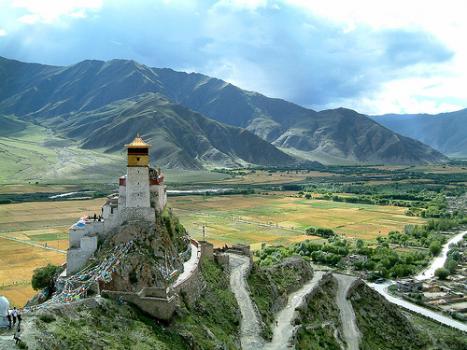
yumbu-lagang-monastery

People object when coerced down a particular path, even if they know it is for the better. It is primeval; they feel trapped and cannot get passed this feeling. You have to make them want to go; make the lead so soft they forget it is there.

– Sonam Dorje – 15th Dalai Lama

Only describe the extraordinary

Image

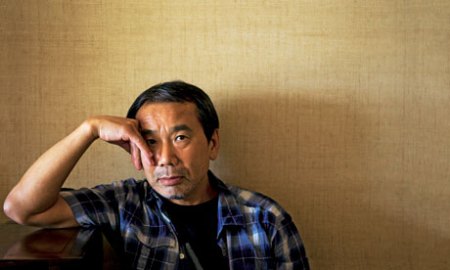
Over the New Year I read a paragraph of Haruki Murakami‘s new novel 1Q84 (pg. 189 HB) and found a wonderful insight to improve my descriptive writing.

An older editor, Komatsu, gave a younger writer some advice on a piece of fiction he was we-writing:

“When you introduce things that readers have never seen before into a piece of fiction, you have to describe them with as much precision and in as much detail as possible. What you eliminate from fiction is the description of things that most readers have seen.”

There is nothing more sure to stop a person reading than if you describe an ordinary scene in a clinical manner. If it is just a room, call it that; a room, and leave the reader to fill in the blanks. But if the room is imperative to the story then describe it through the eyes and tilted perception of the mind of your narrator or character.

I’d love to read a literal translation of Marakami’s original dialogue for his character Kamatsu. Please comment if you find it?

Voice in song lyrics

Augie March’s song Farmer’s Son came up on shuffle on my iPhone today and was reminded how cleverly they infuse their lyrics with voice. Even some of the words they use, there are so few used in a song they all have to be good, e.g. Shirk. It is one of the singles taken from their  Watch me disappear album.

I’ve always enjoyed music from artists who tell stories in their songs; Billy Bragg, Paul Dempsey, Paul Kelly, Tim Friedman, Bjork, Kate Miller-Heidke, The Killers, Lisa Mitchell, Peter Gabriel… where do I stop!

AlbumCover - website

For more information on the band Augie March see  www.augiemarch.com.au