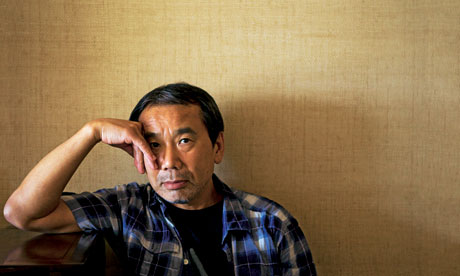
releasing your and your character’s VOICE

Photo Credit: Ian Kahn

In the writing world there are two types of VOICE:

  1. Your authorial style, that is unique if
  2. The style of speech and thought pattern or processes of a character

Authorial VOICE

We all have our favorite writers and it is this that we often  recognise from the first sentence of a work. It is more than a style of Point of View (POV) and many author’s work can be recognised from blind readings; Kazuo Ishiguro is a writer I’ve found to have a unique authorial voice.

At University and in writer’s groups I found it useful to imitate the voice of an author I admired. This exercise is like the Form/No-Form training in martial arts but eventually you must relax the form you are imitating until your own appears and it becomes something only you could have written.

It can be as enlightening to turn this exercise on its head and attempt to imitate a writer you dislike, let yourself go and become that writer; you’ll recognise some habits from your writing that you need to drop.

Character Voice

Characters, too, should have a unique voice. I’ve found that I must inhabit the character’s mind to achieve this though. I try to have a minimum of one hour put aside to write in isolation so that I have the time to reacquaint myself with the character and then inhabit them comfortably.

For antagonist or evil characters it is challenging to enter their minds but also to exit their minds unscathed.

I find songs a great source for words to use in character dialog; songs are like haiku (the better ones at least) where every word, every syllable, should be there only on merit. Most of us are lazy in our speech and we often use the incorrect word because it just pops out. If not overdone this can provide a character with a unique voice.

The same two elements of writing apply for a blog; the words should drop out of your head or heart and on to the page, only editing typographical errors.

“V” is for Voice

1Q84 – Murakami’s cult masterpiece

Haruki Murakami’s epic novel 1Q84 was an instant success in Japan and soon its publishers were in a mad rush to get the work published for the english language market.

Oddly mirroring the plot line in the novel where one of main characters ghost rewrites a story, the publishers of 1Q84 were in such a hurry to get it to market that they enlisted the services of two different writers to translate the work; one for books I and II, and another for book III.

Set it Japan in 1984 the story revolves around two central characters:

  • Aomame (written with the same characters as the word for “green peas” and pronounced Ah-oh-mah-meh); a female fitness instructor and part-time assassin
  • and Tengo, an aspiring novelist and part time editor and maths lecturer

The point of view alternates each chapter with Aomame and Tengo and the reader slowly learns their connection. Murakami enjoys playing with the time period too and takes his time explaining iconic objects of the time.

1Q84 features an immaculate   conception, telekinesis, transmigrating souls and a talking crow. But the   more blatant oddness of Murakami’s plots tends to distract us from their   roots in emotions that are just as unaccountable. A virtue of his writing is   that, carried away, you rarely sense the strain. – Anthony Cummins The Telegraph UK


Knopf / Getty Images

The title 1Q84 has its roots in a few different places; it is set in 1984, there is of course George Orwell’s novel 1984, and in the story Aomame coins the term for the odd version of the world she finds herself in; it is 1984 but also no longer the same. The name of the letter Q is also the same sound in Japanese as the number nine “Kyu”. And the complexity of this too mirrors that of the storyline in many ways.

…Yes, this is a Haruki Murakami novel, where magical and dreamlike phenomena are deadpanned into existence with the same calm craft that his characters routinely employ in cooking themselves delicious-sounding Japanese meals. – Stephen Poole, The Guardian UK

Murakami has a knack for oddball twists (talking cats, raining fish) and in 1Q84 this continues with terrifying “little people” emerging from the mouths of goats and people and a moss coloured second moon hanging in the sky.

Having Tengo and his editor and co-conspirator discuss the writing and editing process delivers some classic writing advice:

“When you introduce things that readers have never seen before into a piece of fiction, you have to describe them with as much precision and in as much detail as possible. What you eliminate from fiction is the description of things that most readers have seen.”

and on story development:

“Once a gun appears in a story, it will be shot and someone will die”. 

1Q84 is a masterpiece but I am left a little frustrated at having to read the translated story rather than Murakami’s original Japanese work.

Q is for 1Q84 by Haruki Murakami

What is the One Point, hara, or lower dantien?

The one point (also hara or lower dantien) is often explained as the centre of gravity and this is a good start, or “in the ball park” as a Japanese Sensei of mine once joked. But this is only the stepping off point.

For each of us the One Point is the centre of the universe.

The universe is of infinite size and therefore every point in it is also at its centre. Imagine the universe shrinking around you until it is compressed to a single point as inconceivably small as the universe is inconceivably large. This is the One Point, and we can learn to control and use it.

I have found that the One Point becomes the centre of my mind and can be moved about to stabilize myself mentally or physically.

In the West there is a saying “to keep yourself grounded” and this too is a good place to begin, as it too incorporates control of both your physical body and your mind. 

To keep one point is the first of the four basic principles of Aikido (Ki no fudo ho). If we achieve one of these principals, we also achieve the others but if we try to achieve more than one we will not achieve any.

It is as easy to recognise when someone has one point; they are relaxed, happy, centred, balanced, “grounded” and they move without breaking this form, they strike the ball sweetly, throw faster, run effortlessly and always have a light floating feeling. The opposite is also true when we lose one point; our form is bad we bounce around and look to be trying too hard.

If your find you have lost one point, shrink the universe by half and by half until it forms at your centre, and let your mind move there where it too is the centre of the universe.

“O” is for the One Point

No-Form, No thought, No Mind

When we study a new art form we are given forms of movement and told to repeat them endlessly. Our teachers are vigilant and correct our form when we stray but a hair’s breadth.

In Search of Simplicity

As we advance we are given ever more complicated forms to practice, yet we see our teachers break their own rules, seeming to do exactly what we are berated for.

I see shades of Form and No-Form argument in the following passage from Takuan Soho.

The mind that becomes fixed and stops in one place does not function freely. Similarly, the wheels of a cart go around because they are not held rigidly in place. If they were to stick tight, they would not go around. The mind is also something that does not function if it becomes attached to a single situation. – Takuan Soho

One must know the correct form intimately, from the subtle angle of a finger to the large movements of the torso, before we can perceive where to lesson our grip on that form.

You cannot throw the pieces of a cart in a pile and expect to use it as a cart. It must follow the form…but not too rigidly or it becomes a model of a cart—not the real thing itself.

It is the same when we practice any art form, we copy the masters endlessly, searching for those subtitles that belay their importance, hidden many times by large flourishing strokes of the brush or pen.

In the martial arts the form alone is not effective in actual combat.

When one has reached maturity in the art, one will have a formless form. It is like ice dissolving in water. When one has no form, one can be all forms; when one has no style, he can fit in with any style. – Bruce Lee

In a passage from his novel “Musashi“, Eiji Yoshikawa wrote:

Yoshino told Musashi he was rigid and would lose any battle in that state. She cut open her lute to show him how it could produce such varying sounds with only four strings.

It had a central wooden piece that was held in place but not firmly.

“If the cross piece were as taut and unbending as you are, one stroke of the pick would break a string, perhaps even the sounding  board itself.”


Takuan Soho’s writing is infused with wit and multiple levels of meaning. In the following passage he discusses the ‘Mind of No-Mind’ motif.

The mind that thinks about removing what is within it will by the very act be occupied. If one will not think about it, the mind will remove these thoughts by itself and of itself become No-Mind.

If one always approaches the mind in this way, at a later date it will suddenly come to this condition by itself. If one tries to achieve this suddenly, it will never get there.

An old poem says:

To think, “I will not think”—
This, too, is something in one’s thoughts.
Simply do not think
About not thinking at all.

You have got to love that!

“N” is for No-Form, No-Thought, No-Mind

Learning…the teacher must learn the most

Today’s post is a cacophony of snip-its and quotes about learning and teaching.

From “The Years of Rice and Salt” by Kim Stanley Robinson

It is always the teacher who must learn the most, Bistami thought, or else nothing real has happened in the exchange.  Pg. 130

The word of God came down to man as rain to soil, and the result was mud, not clear water. (Bistami) Pg. 128

US edition coverFrom “Musashi” by Eiji Yoshikawa

At times like this, the world, which he once thought so full of stupid people, seemed frighteningly large. Pg. 472

After this experience, he realised how premature his judgement had been and how importent and useful randomly acquired bits of knowledge could subsequently be.Pg. 362

– I must have subconsciously picked this lesson up from a previous reading, or another source, as it is one of the items of advice I included in a conference presentation in 2002: “Listen to everything, try and understand everything, see everything. Time is only wasted if you do not listen. One day this knowledge will be useful in ways you do not expect.”

From “The Lone Samurai – the life of Myamoto Musashi” by William Scott Wilson

…the principles of swordsmanship must be understood as though the student himself had discovered them. This was a major departure from other sword styles of Musashi’s time.

From “The Martians” by Kim Stanley Robinson

Imbition is the tendency of granular rock to imbibe a fluid under the force of capillary attraction, in the absence of any pressure. Sax became convinced that this was a quality of mind as well. He would say of someone, “She has great imbition.” and people would say “Ambition?” and he would reply, “No imbition.” And because of his stroke people would assume he was just having speech trouble again. Pg. 337

From Quotes:

If you’re more relaxed I think your brain functions more effectively. Tibetans, generally speaking, are quite jovial. In my family we were always laughing. – Dalai Lama

Minds are like parachutes; they work best when open. – Lord Thomas Dewar

You must sit in a chair for a very long time, with your mouth open, before roast duck flies in. Chinese Proverb

If you are standing on the shoulders of giants, modesty is not only pointless, it is disrespectful.

Don’t limit a child to your own learning for they were born in another time. – Rabbinical saying

Teching in a martial art is a great place to learn the art of teaching (and learning), “there is nowhere to hide on the mat”, but the princples can be applied to any situation be it a business meeting, talking with your children, or writing a story/magizine article.

I have found that when most people teach or talk it is a one directional act. People immediately put up walls in their minds, even if they know the information is something they need to understand; it is primeval. You have to set up the environment so that they decide to draw the information in, then as a teacher you don’t force it on to them or spoon feed them, you just put the knowledge out there to be imbibed by their now open minds.

“L” is for Learning